

.jpg)
Matcha Noodles: A Craft Choice Rooted in Nature
Matcha noodles are made by kneading premium Japanese matcha powder directly into the dough — no artificial colorings, no flavorings. Color, aroma, and taste come entirely from the quality of the ingredients themselves. For consumers who care about ingredient sourcing and process transparency, this is a product worth knowing.
Ingredient Quality: From Tea Garden to Noodle
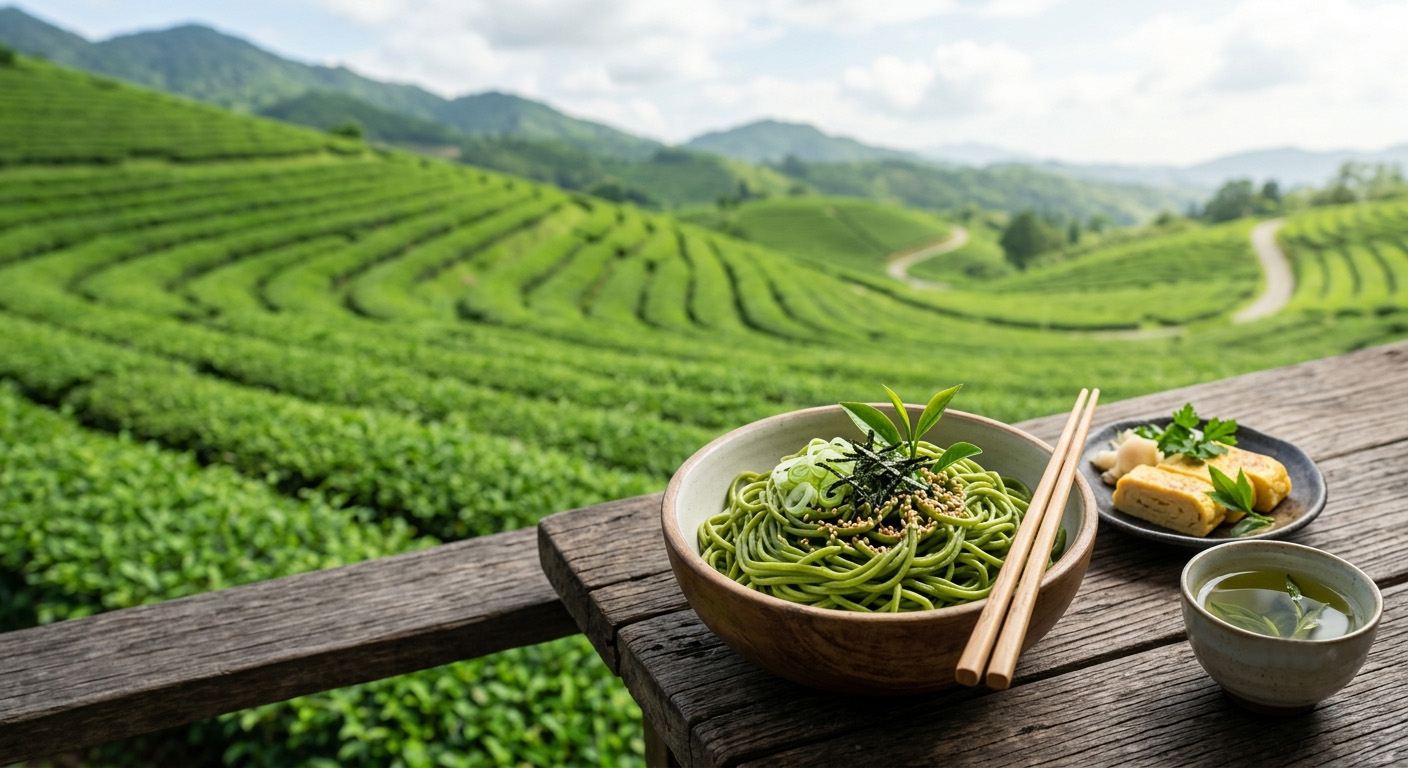
The foundation of matcha noodles lies in the matcha powder used. Premium matcha is sourced from renowned Japanese growing regions such as Uji and Nishio, where tea plants are shade-covered for approximately three to four weeks before harvest. This process encourages the leaves to accumulate higher concentrations of chlorophyll and L-Theanine. The resulting matcha powder is vibrant green, delicately aromatic, and finishes with a natural sweetness — a clear distinction from lower-grade matcha, which tends to be bitter and dull in color.
During production, matcha powder and high-gluten flour are blended in a precise ratio, with salt added to strengthen gluten structure. The dough is kneaded repeatedly until smooth and dense. The finished noodles are springy and chewy after cooking, with a natural sheen on the surface, and hold their texture well without turning soft or mushy.
Nutritional Value: The Functional Benefits of Matcha
As a whole-leaf ground tea powder, matcha delivers a more complete nutritional profile than conventionally brewed green tea:
- Catechins (Tea Polyphenols): The primary functional component of matcha, known for antioxidant activity
- L-Theanine: Supports calm, sustained focus and works synergistically with caffeine
- Chlorophyll: A natural source of green pigment — no artificial coloring needed
- Dietary Fiber: Consuming matcha powder provides more complete tea leaf fiber compared to steeped green tea
As part of a balanced diet, matcha noodles offer a practical, everyday way to incorporate natural phytonutrients.
Serving Suggestions & Pairing Ideas
Matcha noodles have a clean, refined flavor profile with a gentle herbal bitterness, making them highly versatile across a range of sauces and ingredients.
Cold Noodles (Recommended for Summer) After cooking, rinse immediately in ice water to enhance elasticity and a smooth texture. Serve with a dipping sauce made from kombu-katsuboushi dashi, soy sauce, and mirin, garnished with wasabi and white sesame seeds. Light, refreshing, and ideal as a summer meal.
Hot Soup Noodles (Recommended for Autumn & Winter) Use a mild katsuboushi broth as the base — heavy sauces can overpower matcha's delicate flavor. Top with a soft-boiled egg, nori, and thinly sliced steamed chicken for a well-balanced, protein-rich main dish.
Creative Culinary Applications Matcha noodles also pair well with cream-based sauces. The richness of dairy effectively balances matcha's subtle bitterness, creating a layered East-meets-West flavor profile — an excellent option for chefs looking to develop signature dishes.
Storage & Cooking Guide
|
Item |
Recommendation |
|
Storage |
Sealed container in a cool, dry place away from direct sunlight (to prevent chlorophyll oxidation and color loss) |
|
Best Before |
Best consumed within six months of production date |
|
Water Ratio |
100g per serving, cooked in at least 1,000ml of boiling water |
|
Cooking Time |
3–4 minutes after water returns to a boil; adjust to personal preference |
|
Note |
Avoid overcooking to preserve the noodle's springy texture and matcha color |
Our Philosophy
We believe great ingredients don't need complicated processing. Every step of our matcha noodle production — from ingredient sourcing to manufacturing — is guided by the principles of transparency and traceability. Choosing real matcha powder over artificial flavoring or coloring is our most fundamental commitment to product quality, and our most direct form of respect for the consumer.
Choosing matcha noodles means choosing a lifestyle that holds ingredients to a higher standard.