

The most familiar way to drink tea is by steeping tea leaves — hot water is poured in, the leaves unfurl, and aroma and flavor are released. But you may not realize that traditional steeping actually releases only a portion of the nutrients and flavor locked inside the leaves. A large amount of these compounds remains trapped in the spent leaves and is ultimately discarded. This is precisely why tea powder has been gaining attention.
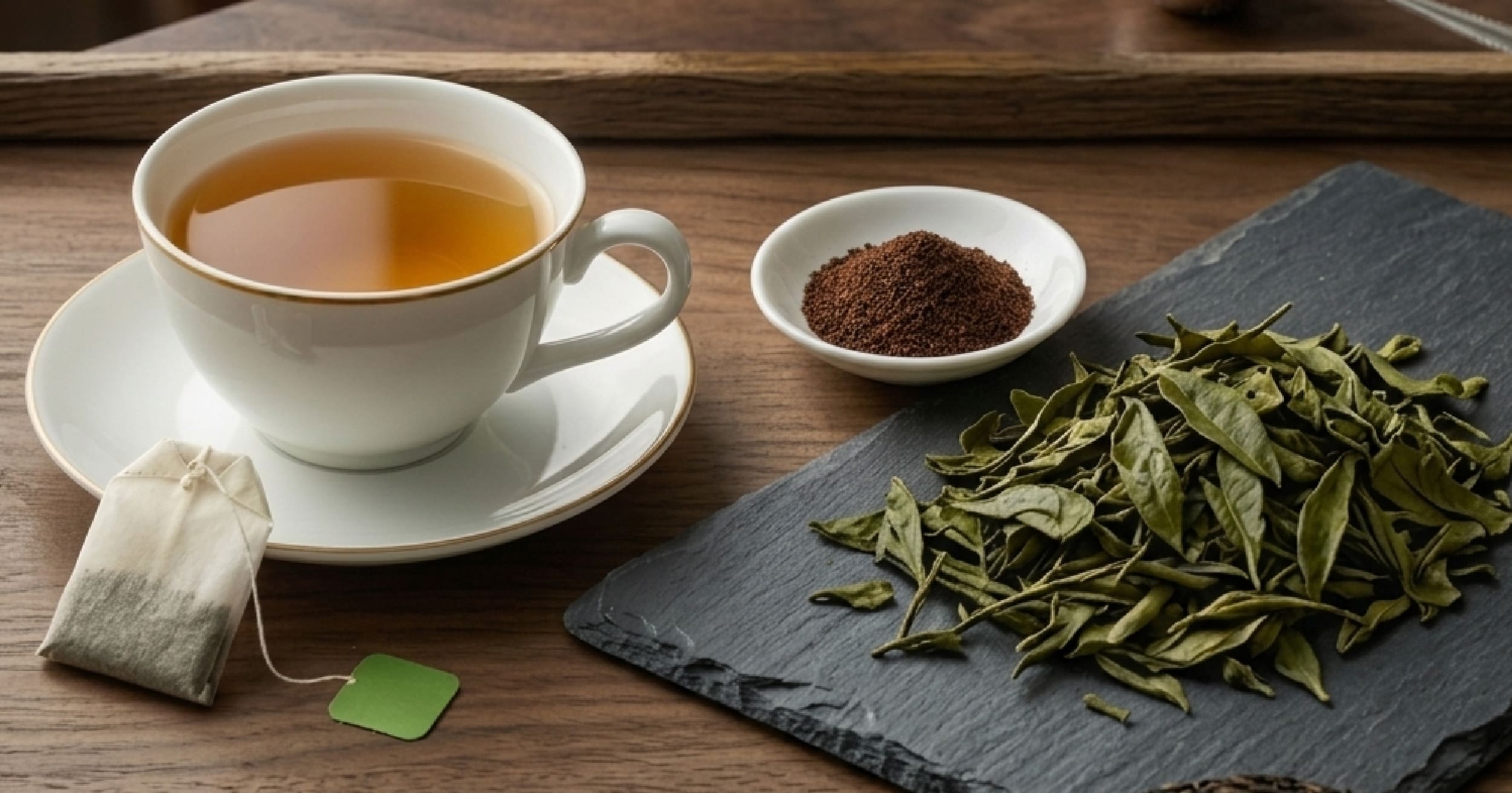
The Physical Limits of Steeping: Extraction Rates Under 50%
The principle behind steeping tea is "diffusion of water-soluble compounds." Substances like catechins, L-theanine, and caffeine must permeate through the cell walls into the water before they can be consumed by the body. However, research shows that with a typical 3-5 minute hot-water steep, the catechin extraction rate usually reaches only about 30% to 50%, while L-theanine and certain fat-soluble aromatic compounds are even harder to fully release. In other words, no matter how carefully you steep, a substantial share of the nutrients and flavor in tea leaves remains "trapped" within the fiber structure, never making it into the cup.
Tea Powder: Consuming the Whole Leaf
Tea powder is made by grinding tea leaves directly into micron-sized particles. There's no need to filter or wait for extraction — the cell walls of the entire leaf are ground apart, allowing the liquid or ingredients to absorb "all" of the tea leaf's components directly. This means:
- More complete nutrient intake: Catechins, L-theanine, dietary fiber, and other compounds are no longer left behind in discarded tea residue — they're consumed along with the powder itself.
- Concentrated, consistent flavor: Since extraction no longer depends on water temperature or steeping time, tea powder delivers a more consistent, more robust aroma and color, without the variability caused by different brewing techniques.
- Greater application flexibility: Tea powder can be mixed directly into milk, yogurt, batter, or dessert fillings — it's not limited to the single format of "hot water steeping," making it well-suited for lattes, baking, frozen desserts, and other diverse uses.
- Less waste: The spent leaves from traditional steeping are typically thrown away, whereas tea powder ensures every bit of the leaf's nutritional value is put to use — a more sustainable approach in some sense.
A Cup of Tea Powder Drink: Drinking the "Whole Leaf"
In other words, when you steep tea leaves, what you're drinking is the portion that the leaves "released." When you drink a beverage made with tea powder, you're drinking the leaf "itself." For those who value rich flavor and complete nutritional intake, tea powder offers a more direct way to make full use of a tea leaf's value.
This is also why, in recent years, tea powder has increasingly been adopted across bubble tea shops, bakeries, and the health food industry — it's not just an alternative way to drink tea, but a scientific choice that ensures a tea leaf's full potential is truly put to use.