

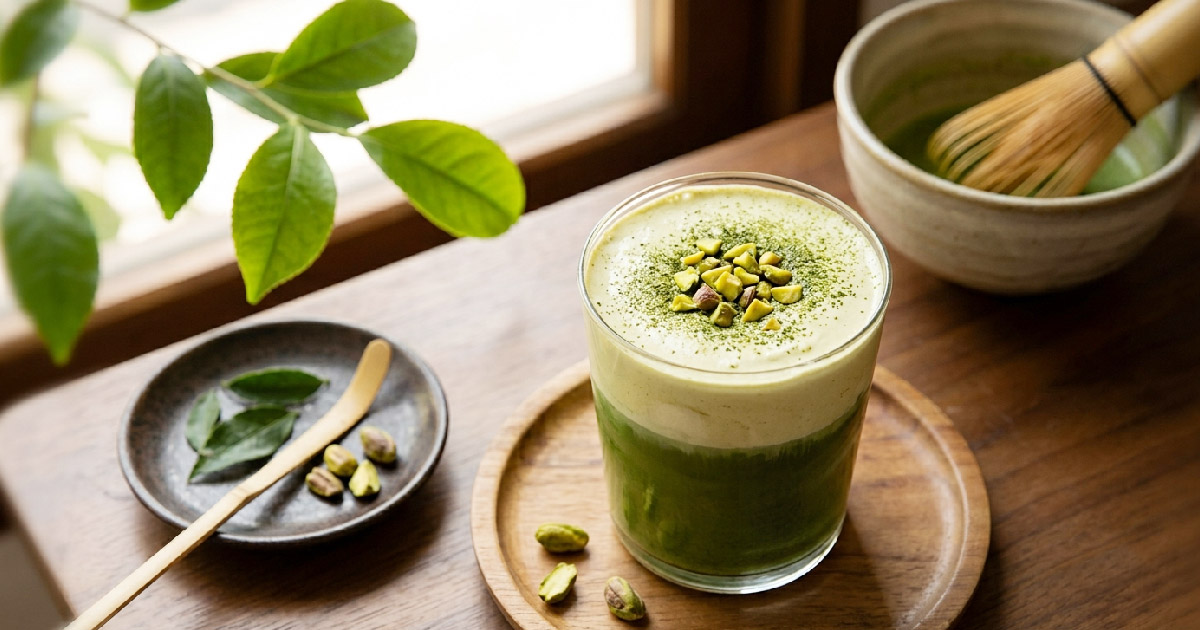
You might have had a matcha latte, and you’ve probably tried pistachio ice cream. But what exactly happens when you combine these two ingredients into a single cup? The answer goes far beyond a "pretty color"—it’s a chemical reaction taking place right on your palate.
Where Does Matcha’s Bitterness Come From?
The secret to matcha lies in shade-grown green tea leaves. About three to four weeks before harvest, farmers cover the tea plants to block direct sunlight. Deprived of light, the leaves produce a massive amount of chlorophyll to sustain photosynthesis, while simultaneously slowing down the oxidation of polyphenols. This not only preserves matcha’s vibrant emerald hue but also yields a higher concentration of catechins and L-theanine compared to standard green tea.
Catechins are the primary source of bitterness and astringency, whereas L-theanine delivers savoriness (umami) and sweetness. The ratio between the two dictates whether a matcha tastes "distinctly sweet in the aftertaste" or "heavily bitter." In high-quality matcha, both compounds are highly concentrated, creating a dynamic tension between bitter and sweet notes.
What Role Does Pistachio Play?
The flavor profile of pistachios centers around their rich unsaturated fatty acids, particularly oleic acid and linoleic acid. These fats do more than just provide calories; they act as flavor carriers. Many volatile aromatic compounds must dissolve in fat to be released slowly upon heating or grinding, which creates the distinct "nutty aroma" we perceive.
In terms of flavor structure, fat exerts a physical "coating" effect. When the oils from the pistachio enter your mouth, they form a thin layer over the tongue. This slows down the rate at which bitter compounds hit your taste buds, making the bitterness of matcha's catechins feel softer and more layered rather than punchy right from the start. This principle is very similar to pairing espresso with milk: the fat isn't meant to mask the flavor, but rather to slow down its tempo.
The Tasting Sequence
Thanks to this interplay, a Pistachio Matcha Latte offers a distinct, three-tiered flavor journey:
- The First Sip: The herbal, crisp bitterness of matcha.
- The Mid-Palate: A rounded, nutty richness brought by the pistachio oils.
- The Finish: The natural, lingering sweetness of L-theanine.
As the drink warms up in your mouth and the fats gradually melt, the nutty aroma emerges even more prominently in the back notes. When trying it for the first time, don't rush to swallow. Let the liquid linger on your palate for three to five seconds to fully experience the evolution of its layers.