

Step 1 of Tea Powder Manufacturing: Selecting Tea Leaves to Lay the Foundation for Quality
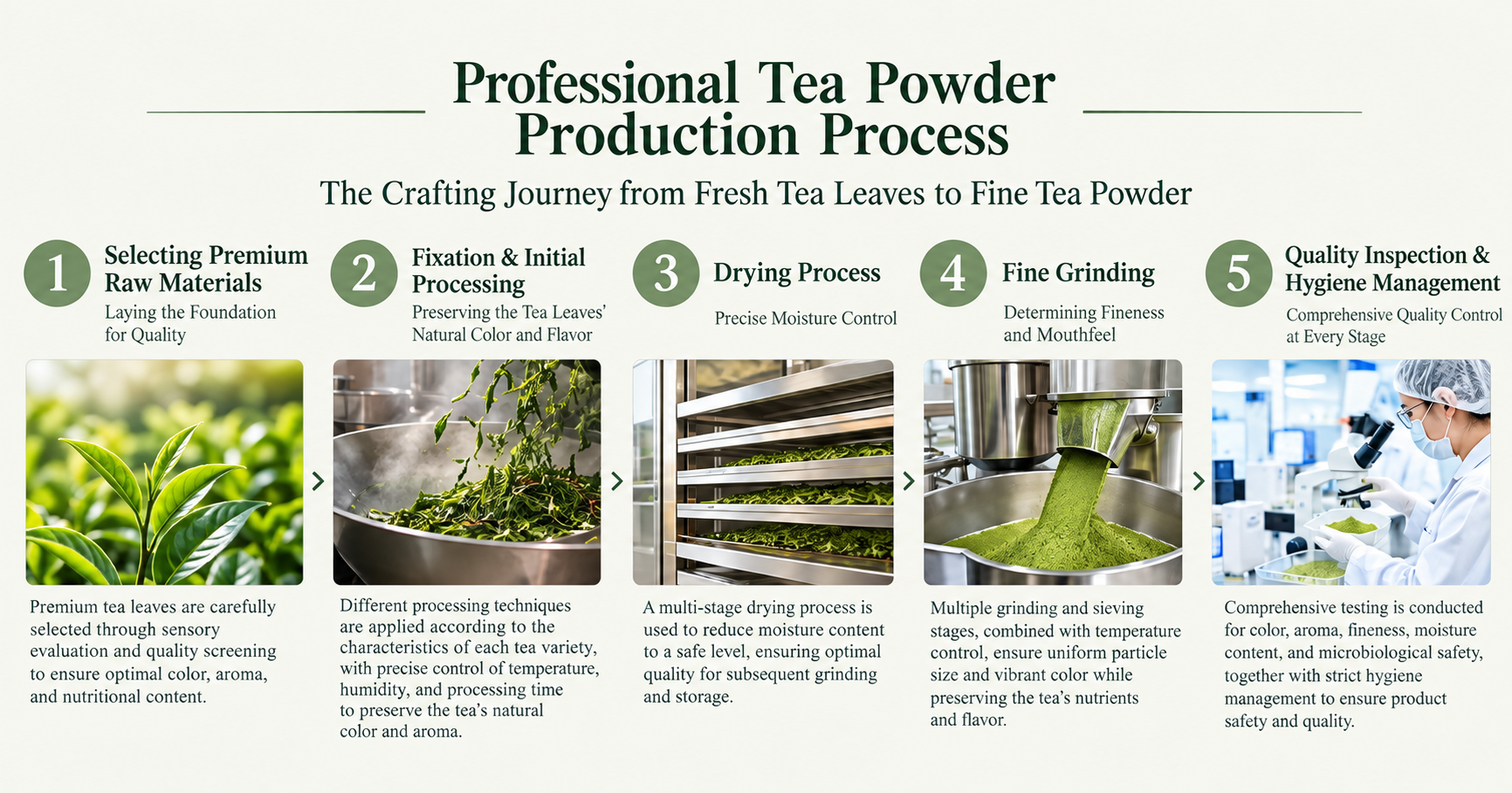
The quality of tea powder is largely determined the moment the tea leaves arrive at the factory. No matter how precise the later processes are, if the raw material itself has problems, the aroma, flavor, and safety of the finished product are difficult to fix. That is why raw material selection and inspection is the one step in the tea powder manufacturing process where no compromise is acceptable.

1. Choose the Tea Variety and Fresh Leaves Based on Product Positioning
- Green tea powder and matcha powder: Tender, bright green leaves with high chlorophyll content are preferred, so the finished powder has a vivid green color.
- Black tea powder and oolong tea powder: Aroma after fermentation or roasting is the priority, so the raw material needs a distinct varietal character.
- Tea powder for beverages and baking: Besides flavor, cost and supply stability matter, so batches of consistent quality are usually chosen.
2. A Stable Supply Source Matters
Quality tea powder manufacturers typically work with fixed tea gardens or growers, keeping control over harvest season, cultivation methods, and storage conditions to ensure consistent flavor in every batch. A stable source of raw material is also the key to long-term consistency in tea powder quality.
Step 2: Fixation and Primary Processing to Lock In the Tea's Natural Color and Flavor
Once the tea leaves pass inspection, they move on to primary processing, and the most critical part of this stage is fixation (known in Chinese as sha qing).
What Is Fixation?
Fixation uses high heat to deactivate the enzymes in tea leaves and stop them from continuing to oxidize. Without fixation, the leaves gradually change color and lose their aroma, and they can no longer keep their original fresh green color and delicate fragrance.
Common Fixation Methods
| Method | Characteristics | Common Applications |
|---|---|---|
| Steaming | High-temperature steam treatment; vivid green color with a savory (umami) note | Matcha powder, green tea powder |
| Pan-firing | Fired in a hot pan; aroma leans toward a toasty, chestnut-like scent | Some green tea powders |
| Hot-air fixation | High-temperature hot air treatment; easier to scale and control | Industrial production |
Key Points for Controlling Fixation
- Temperature and time: If the temperature is too low, the enzymes stay active; if it is excessive, the leaves may scorch and turn bitter and astringent.
- Uniformity: The leaves must be heated evenly to avoid some being overcooked while others remain raw.
- Cooling afterward: Cooling quickly after fixation further protects color and aroma.
It is worth noting that the primary processing of different tea types is not the same. Black tea, for example, goes through withering, rolling, and fermentation, while oolong tea involves a partial fermentation step. This article uses green tea powder as its main example, and other tea types adjust the process according to their characteristics.
Step 3: Drying, Precisely Controlling Moisture Content
After fixation and primary processing, the tea leaves still contain a fairly high amount of water. The drying step brings the moisture down to a suitable range before the leaves can be ground and stored for the long term.
Why Does Moisture Content Matter So Much?
- It affects shelf life: Excess moisture makes it easy for microorganisms to grow and for the tea to mold or turn rancid.
- It affects grinding: Leaves that are too moist stick together and clump, making it impossible to grind a fine, even powder.
- It affects flavor and color: Improper drying can cause aroma loss or a duller color.
Common Drying Methods
- Hot-air drying: Circulating hot air dries the leaves gradually. The equipment is mature and the capacity is high, making this the most common method.
- Far-infrared drying: Heating is more uniform, which helps improve aroma.
- Freeze drying: Water is sublimated at low temperature, preserving the maximum amount of aroma and nutrients, though at a higher cost.
- Low-temperature vacuum drying: Water is removed at a lower temperature, which suits heat-sensitive materials.
Key Points for Controlling Drying
- Temperature curve: The temperature is usually raised in stages to avoid case hardening, where the surface hardens while the inside stays damp.
- Time management: Too short a time leaves the leaves under-dried, while too long may degrade the aroma.
- Moisture testing: After drying, a moisture analyzer confirms the result. Tea leaves are generally dried to a fairly low moisture level (the actual standard depends on product specifications and customer requirements).
Step 4: Fine Grinding, the Core Process That Determines Fineness and Mouthfeel
Common Grinding Methods
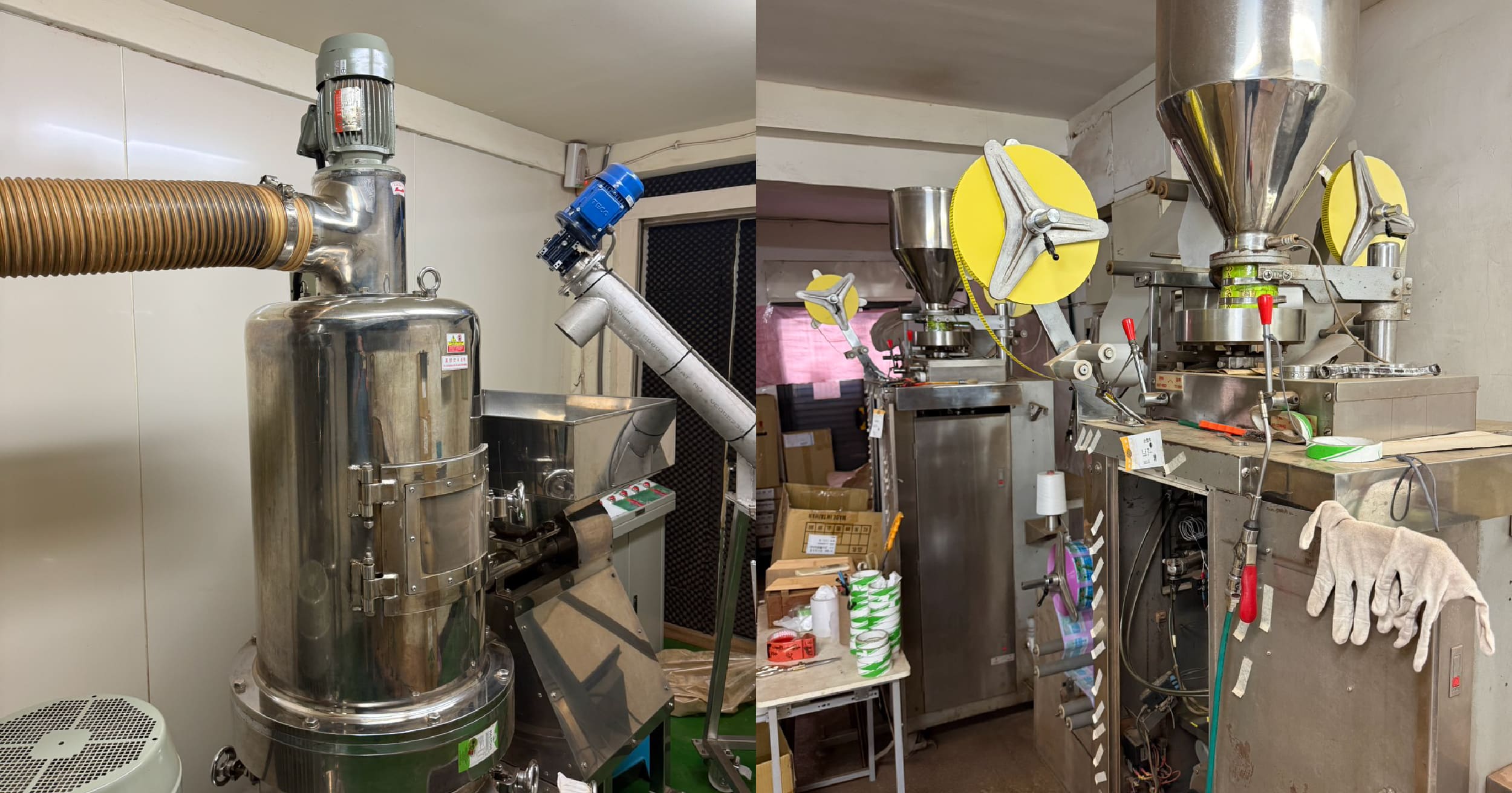
- Stone mill grinding: Commonly used for traditional matcha. The slow speed generates little heat and preserves the tea's aroma, but output is limited and it takes longer.
- Jet milling: High-speed airflow makes particles collide and break apart, producing an extremely fine powder with low heat generation.
- Ball milling and roller milling: Suited to large-volume production, with particle size adjustable to requirements.
- Low-temperature (cryogenic) grinding: Grinding in a low-temperature environment reduces thermal oxidation and effectively locks in aroma and color.
What to Watch for During Grinding
- Control the temperature: Grinding generates frictional heat. Excessive temperature can discolor the powder and cause aroma loss, so cooling or low-temperature equipment is needed.
- Control particle size: Fineness depends on the end use. Brewed beverages, baking, ice cream, and food additives each have different particle size requirements.
- Sift and grade: After grinding, sieves remove coarse particles so the finished powder is uniform, smoother in the mouth, and less gritty.
- Prevent contamination: Grinding equipment must be kept clean and free of metal fragments, and is usually paired with metal detection or magnetic separation equipment.
The Relationship Between Fineness and Mouthfeel
The finer the powder, the smoother it feels and the better its dispersibility and color. However, overly fine powder tends to clump and absorb moisture, which places higher demands on packaging and storage. Finer is therefore not always better, and the right balance depends on how the product will be used.
Step 5: Quality Inspection and Hygiene Management, Safeguarding Every Stage
Tea powder is a food product, so it must go through strict inspection and hygiene management from raw material to finished goods, so that consumers and customers can use it with confidence.
- Facility and personnel hygiene: Environmental cleaning, staff attire, and entry controls are enforced to reduce contamination risk.
- Equipment cleaning and maintenance: Equipment is cleaned before and after every production batch to avoid cross-contamination and residue.
- Systems such as HACCP and ISO 22000: Hazard analysis and critical control points are used to manage food safety systematically.
- Batch traceability: Records of raw materials, processing, and inspection are kept for every batch, so any problem can be traced and handled quickly.
- Retained samples: Samples of the finished product are kept for later verification.
Understanding the Tea Powder Manufacturing Process to Choose High-Quality Tea Powder
Looking back at the entire tea powder manufacturing process, from selecting and inspecting the raw tea leaves, to fixation and primary processing, drying to control moisture content, fine grinding, and finally quality inspection and hygiene management, every step is closely linked and none can be skipped.
What to Look for When Buying Tea Powder
- Check the color: Quality tea powder has a natural, even color. Green tea powder, for example, should be a vivid green rather than dull or yellowish.
- Smell the aroma: It should carry the natural aroma of the tea variety, with no musty, burnt, or off odors.
- Taste the texture: It should be fine and smooth, dissolve well, and have no noticeable coarse particles.
- Look for information: Give preference to suppliers who provide details on raw material origin, the production process, and inspection reports.
- Check for certifications: Food safety management certifications such as HACCP and ISO 22000 offer greater quality assurance.
If you would like to learn about YZB tea powder specifications and related information, please contact us.➡️Click here to contact us
Or visit our store to taste YZB's high-quality tea powder.➡️Click here to purchase