

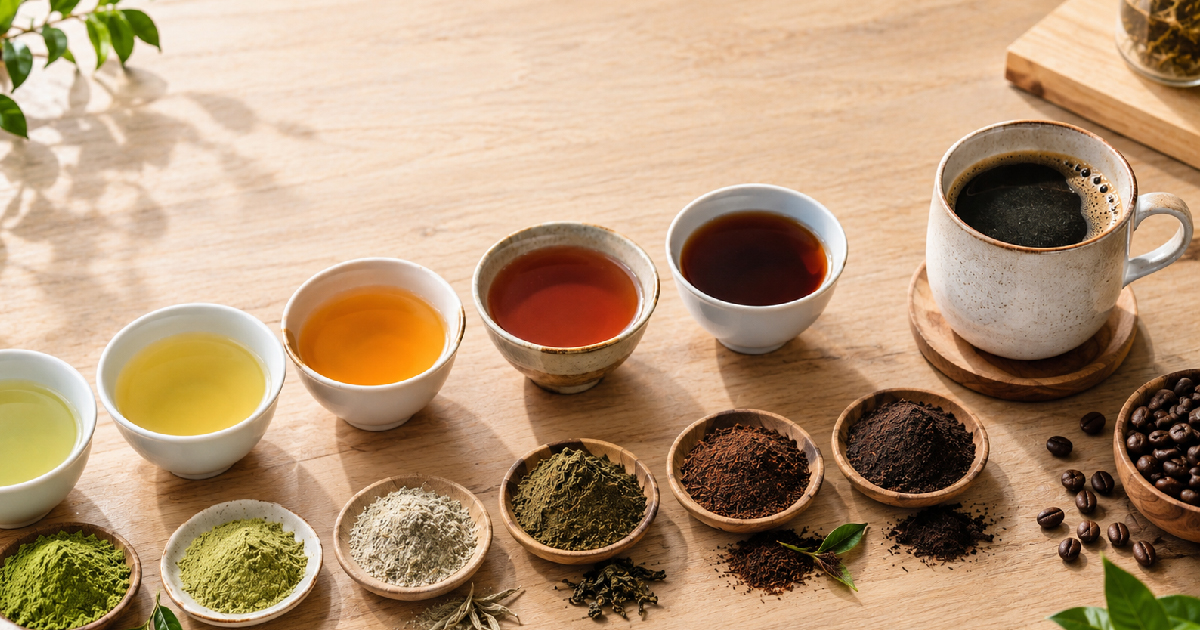
Does Tea Have Caffeine? What Caffeine in Tea Leaves Actually Is
Yes. All tea made from the tea plant (Camellia sinensis), including green tea, black tea, oolong tea, contains caffeine. The caffeine in tea is the same compound as the caffeine in coffee, with an identical molecular structure.
Caffeine is one of the plant's natural defense mechanisms, helping to deter some insects from feeding on it. The tea plant's buds and young leaves need the most protection, so their caffeine content is generally higher than that of mature leaves.
You may have heard that "the caffeine in tea is gentler." This is only half true. The caffeine in tea is not weaker, but tea also contains L-theanine, polyphenols, and other compounds that change how the body responds, making the energy lift feel smoother than coffee's (more on this below). In addition, a cup of tea usually contains less total caffeine than a cup of coffee.
How Much Caffeine Is in Tea? A Cup of Tea vs. a Cup of Coffee
For a standard 240 ml (about one cup) serving, tea contains roughly 15–70 mg of caffeine, with most teas falling between 30 and 50 mg.
| Beverage (approx. 240 ml) | Caffeine content (approx.) |
|---|---|
| Green tea | 20–45 mg |
| Oolong tea | 30–50 mg |
| Black tea | 40–70 mg |
| Regular brewed coffee | 80–120 mg |
| Instant coffee | 60–80 mg |
| Energy drink (approx. 250 ml) | About 80 mg |
The figures above are common ranges. Actual values vary by brand, amount of tea leaves, and brewing method.
Even among teas, the gap can be two to three times. Tea variety, the part of the plant harvested, processing, and how you brew it all affect the result. We break down these key factors in the sections below.
Caffeine in 6 Types of Tea: Green, Black, Oolong, White, Pu-erh, and Dark Tea
| Tea type | Caffeine content (per 240 ml, approx.) | Characteristics |
|---|---|---|
| Green tea | 20–45 mg | Unfermented; fresh and refreshing with a sweet aftertaste |
| White tea | 15–40 mg | Lightly fermented; often made from buds, so content varies widely |
| Oolong tea | 30–50 mg | Semi-fermented; flavor falls between green and black tea |
| Black tea | 40–70 mg | Fully fermented; rich, bold taste |
| Pu-erh tea | 30–70 mg | Post-fermented; aged and young teas differ greatly |
| Dark tea | 30–60 mg | Post-fermented; stands up to multiple infusions, mellow flavor |
Green tea: Moderate to low in caffeine, suitable for everyday drinking. Japanese teas made from tender buds, such as sencha and gyokuro, can be higher in caffeine.
Black tea: Usually one of the higher-caffeine tea types, well suited to mornings or afternoons when you need a boost.
Oolong tea: Falls between green and black tea. Heavily roasted styles have a rich flavor, but their caffeine is not necessarily higher.
Common misconception: Does more fermentation mean more caffeine? Not necessarily. Fermentation mainly changes a tea's flavor and polyphenol structure. Differences in caffeine come more from the tea variety, the part of the plant used, and brewing conditions.
5 Key Factors That Affect Caffeine in Tea
1. Tea variety and the part harvested
Buds and young leaves contain more caffeine than coarse, mature leaves. Teas made mainly from buds (such as some white teas and premium sencha) may be stronger than expected, while teas made from older leaves, such as hojicha and bancha, tend to be lower.
2. Processing and roasting
Roasting, fermentation, and other processes affect flavor and the balance of compounds, but their impact on total caffeine is limited. It's not reliable to judge by "heavier roast = less caffeine" or "more fermentation = more caffeine."
3. Water temperature
The hotter the water, the faster caffeine dissolves. Brewing at 90–100°C extracts more caffeine than brewing at 70–80°C.
4. Steeping time
The longer the steep, the more caffeine in the cup. A 5-minute steep can contain more than double the caffeine of a 1-minute steep.
5. Amount of leaves and number of infusions
More leaves make a stronger brew with more caffeine. For the same batch of leaves, the first few infusions release more caffeine, and later infusions gradually release less.
How Is Caffeine in Tea Different from Coffee? Why Does Tea Cause Fewer Jitters?
Many people say, "Coffee makes my heart race, but tea is fine." There are several main reasons.
The buffering effect of L-theanine
Tea contains L-theanine, which is nearly absent in coffee. Research suggests that when combined with caffeine, it can help you stay focused while reducing feelings of tension. This is one reason many people feel "alert but not anxious" after drinking tea.
Lower total intake
On average, a cup of tea has less caffeine than a cup of coffee, so even several cups cause a smaller short-term impact.
A gentler release through brewing
Tea leaves are infused multiple times and release their contents gradually. Together with polyphenols and other compounds, the overall effect is often steadier than drinking a high-concentration coffee all at once.
Who might be better suited to tea?
For people who are sensitive to caffeine or who get heart palpitations or stomach upset from coffee, light tea is usually a gentler choice. Keep in mind, though, that "less likely to cause discomfort" does not mean "no effect at all," and sensitive people should still watch their portions.
How Much Caffeine from Tea Is Safe Each Day? A Guide to Daily Limits
According to recommendations from various health authorities, the reference upper limits for healthy adults' daily caffeine intake are as follows:
- Taiwan Food and Drug Administration (Ministry of Health and Welfare): No more than 300 mg per day for adults
- U.S. FDA and European EFSA: About 400 mg per day or less for healthy adults
Converted to tea, at 40 mg per cup, 300 mg equals more than 7 cups. That sounds like a lot, but keep in mind:
- If you also drink coffee, cola, or energy drinks, everything must be counted together
- Bubble tea, bottled tea drinks, and milk tea also contain caffeine, often in higher concentrations and larger portions than home-brewed tea
- Metabolism varies a lot: some people can't sleep after one cup, while others feel nothing after three
Treat these numbers as an "upper limit" rather than a "target," and adjust based on how your body feels.
Who Should Be Extra Careful with Caffeine from Tea
Pregnant and breastfeeding women
Caffeine can cross the placenta and may pass into breast milk. It's recommended to keep intake low (Taiwan advises no more than 300 mg per day, and some organizations recommend even less) and to consult a doctor.
Children and teenagers
Children are more sensitive to caffeine. Taiwan's FDA recommends no more than 2.5 mg per kilogram of body weight per day, and high-caffeine drinks should be avoided.
People who are caffeine-sensitive or have insomnia, anxiety, or arrhythmia
Caffeine may worsen palpitations, anxiety, and sleep problems. Limit intake or switch to caffeine-free drinks, and people with cardiovascular conditions should follow their doctor's advice.
People with acid reflux, anemia, or who take medication
- Strong tea may stimulate stomach acid and is not friendly to those with acid reflux
- Tannins in tea may interfere with iron absorption, so people with anemia should drink tea apart from meals
- Some medications (such as certain antidepressants, asthma drugs, and antibiotics) may interact with caffeine. Check with your doctor or pharmacist
How to Reduce Caffeine in Tea: 5 Practical Brewing Tips
1. Rinsing the leaves helps, but only a little
Discarding a short first infusion removes a small portion of caffeine (roughly 10–30%, depending on the tea). It won't make tea low in caffeine, and it also costs some flavor.
2. Lower the water temperature and shorten the steeping time
Using 70–85°C water and steeping for 1–2 minutes is the most direct way to reduce caffeine.
3. Choose lower-caffeine teas
Teas made from roasted or mature leaves, such as hojicha and bancha, are usually lower in caffeine. Teas made mainly from buds deserve more caution.
4. Try cold-brewed tea
Low-temperature extraction usually releases less caffeine, but the amount rises with longer steeping time, so tea cold-brewed for more than 8 hours is not necessarily low.
5. Know about decaffeinated tea
Commercial decaffeinated tea is not "zero caffeine" and usually retains a small amount. Check the label when buying.
Want Tea but Worried About Sleep? Recommendations by Time of Day
Morning: Black tea or a stronger oolong is a good way to start the day.
Afternoon: Oolong and light green tea are good choices. Finishing your tea before 2–3 p.m. is less likely to affect nighttime sleep.
Evening: Low-caffeine or caffeine-free drinks are the safer choice.
How long before bed should you avoid tea? Caffeine has an average half-life of about 5 hours in the body (with large individual variation). It's generally recommended to avoid caffeinated drinks 6–8 hours before bedtime, and sensitive people may need to stop even earlier.
Caffeine in Tea: Frequently Asked Questions
Q1: Can the caffeine in tea be addictive?
Caffeine can cause mild dependence. After long-term heavy intake, stopping suddenly may cause withdrawal symptoms such as headaches, fatigue, and difficulty concentrating. Moderate drinkers are usually not much affected.
Q2: Does drinking tea dehydrate you?
Caffeine has a mild diuretic effect, but at normal drinking amounts the water in tea is still used effectively by the body, so there's no need to worry too much.
Q3: Which tea has the lowest caffeine? Which has the highest?
Generally, hojicha, bancha, and some aged or mature-leaf teas are lower, while black tea and teas made mainly from buds are higher. However, products within the same category vary a lot, so go by the specific tea.
Q4: Does matcha have more caffeine than regular green tea?
Usually, yes. Matcha is made by grinding the whole leaf into powder that you drink directly, so you consume the entire leaf. A cup of matcha therefore often has more caffeine than brewed green tea.
Q5: Does bubble tea have a lot of caffeine?
Not necessarily, but the large portions (500–700 ml), the amount of tea used, and the chance of drinking more than one a day mean the total is easy to underestimate. Consider choosing less sugar and less ice, and keep track of your total intake for the day.
Q6: Can tea replace coffee as a pick-me-up?
Yes, but how energizing it is depends on the tea type and strength. If you're used to coffee's strong kick, tea may feel more "gradual" at first, which is normal.
Conclusion: Choose and Brew Your Tea Wisely to Manage Caffeine Smartly
- All tea made from tea plant leaves contains caffeine. Most cups have about 15–70 mg, usually less than coffee
- Caffeine content depends mainly on the part of the leaf, water temperature, steeping time, and amount used, rather than tea type alone
- L-theanine makes tea's lift steadier than coffee's, but that doesn't mean you can drink it without limits
- For adults, 300–400 mg per day is the reference upper limit. Pregnant women, children, and sensitive people should be more cautious
Want to learn more about different types of tea? Feel free to sample them at our Amazon store, or contact us here to help you find the perfect one for you.