

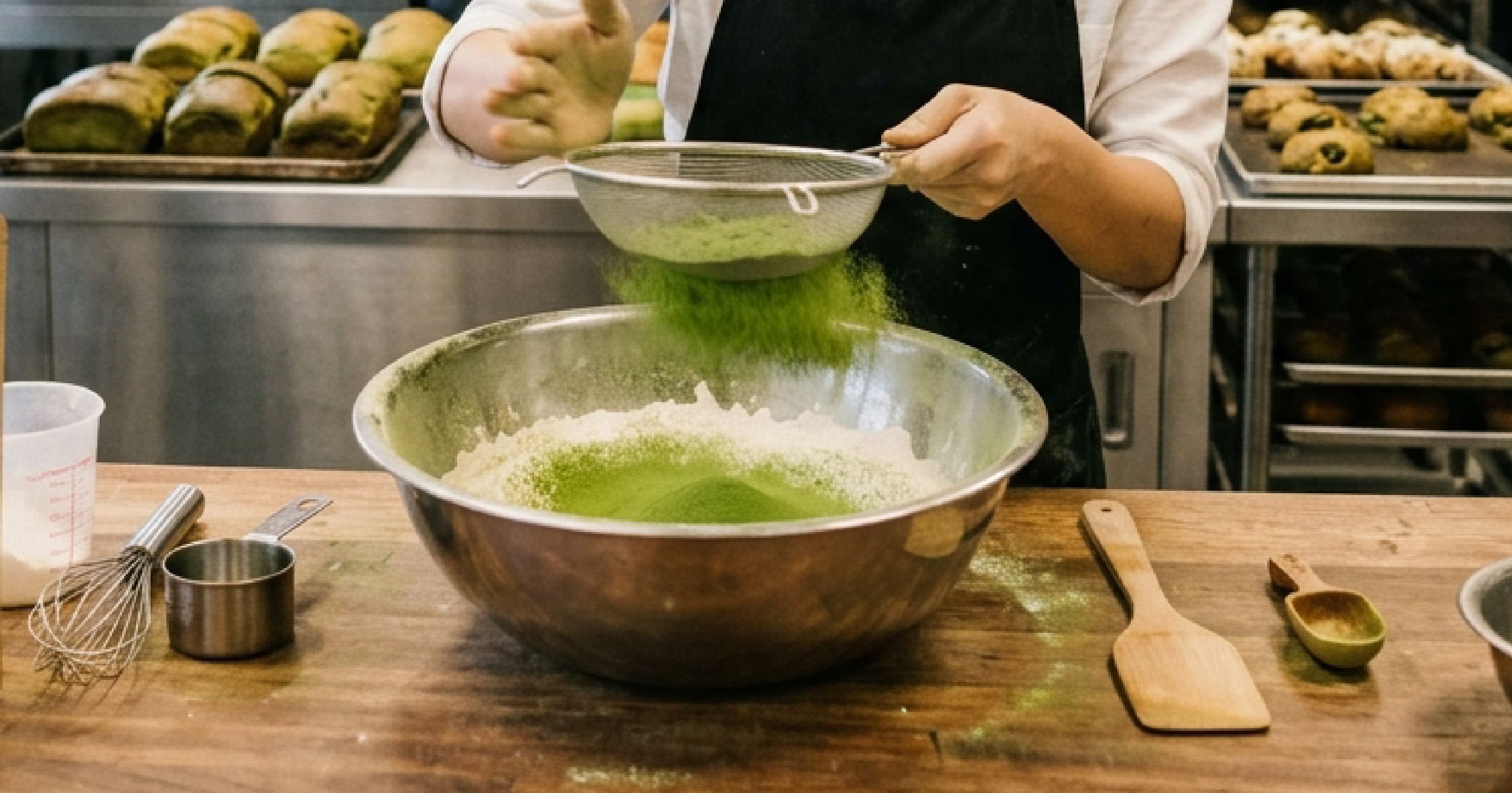
How Much Tea Powder Should You Add? Recommended Usage Rates by Product Type
Add too little tea powder and your product has color but no tea flavor. Add too much and it turns bitter and dry, and your costs climb. This is the dilemma that home bakers, beverage developers, and food manufacturers run into most often.
There is no one-size-fits-all tea powder ratio. It depends on the product type, the kind of tea powder, and your target flavor intensity. This guide covers typical starting ratios for bakery, beverages, desserts and frozen treats, cooking and seasoning, dietary supplements, and beauty and personal care products, and ends with a quick-reference chart so you can find a baseline to test right away.
If you are not sure which type of tea powder to choose, read Complete Guide to Tea Powder: Selection, Common Mistakes & FAQ first. Choosing the right ingredient before adjusting the ratio gives more consistent results.
Important: The ratios in this article are commonly used starting ranges in the industry and in recipe development. Actual usage varies with brand, grade, particle size, and formulation, so always run a small test batch before adjusting. For supplements and cosmetics, usage levels must also comply with regulations and safety assessments; follow professional testing and the rules of your regulatory authority.
First, Understand the Basis for Calculating Tea Powder Ratios
Before looking at the numbers, confirm what the percentage is based on. The same "3%" can produce very different results depending on the basis.
Three Common Calculation Bases
| Basis | Description | Typical Use |
|---|---|---|
| Flour weight | Tea powder weight ÷ flour weight × 100% | Baking (cakes, cookies, bread) |
| Total formula weight | Tea powder weight ÷ total weight of all ingredients × 100% | Frozen desserts, chocolate, seasoning blends, supplements |
| Liquid amount | Tea powder weight ÷ liquid weight (or volume) × 100% | Beverages, puddings, panna cotta |
How to Convert Using Baker's Percentage
Baker's percentage sets total flour weight as 100%, and every other ingredient is expressed as a percentage of the flour.
Example: A formula has 200 g of flour and you want to add 5% tea powder. Tea powder = 200 g × 5% = 10 g.
If you calculate against the "total formula weight" instead, the same 10 g of tea powder in an 800 g total is only about 1.25%. Always check which basis a recipe is using before comparing percentages.
Why the Same Tea Powder Needs Different Amounts in Different Products
- Different bases: Water-based drinks showcase tea flavor easily, while products high in fat and sugar "coat" the flavor and need more tea powder.
- Different dilution: Products with a high proportion of milk or cream dilute the tea aroma.
- Different processing conditions: High-heat baking causes loss of color and aroma, which may call for slightly more powder, but too much turns bitter.
- Different serving styles: Sweetness and flavor perception differ between cold, hot, and frozen products.
Tea Powder Ratios for Bakery Products
Baking is the most common use of tea powder. The following are typical starting ranges based on flour weight (baker's percentage):
| Product | Suggested Ratio (% of flour) | Notes |
|---|---|---|
| Cakes, chiffon cakes, pound cakes | About 3%–8% | Chiffon is light; too much powder can reduce volume |
| Cookies, handmade butter cookies | About 3%–8% | High butter content allows slightly more powder to bring out tea aroma |
| Pineapple cakes, pastry crusts | About 2%–6% (crust portion) | Calculate on the weight of the pastry or crust |
| Bread, sandwich loaves, bagels | About 1%–4% | Excess powder can interfere with fermentation and gluten development |
| Macarons | About 3%–6% (of almond flour + powdered sugar) | Must be sifted to keep the surface smooth |
| Cream puffs, tart shells | About 2%–6% | For choux, watch how the powder's water absorption affects the batter |
How to Substitute Tea Powder for Flour
Tea powder contains no gluten-forming protein, so in baking it is usually used to replace part of the flour so that the total amount of dry ingredients stays the same.
Example: The original formula uses 200 g of flour and you want to add 5% tea powder.
- Tea powder: 200 g × 5% = 10 g
- Flour: 200 g − 10 g = 190 g
Notes:
- For bread and other products that rely on gluten for structure, keep the substitution level low.
- Tea powder absorbs water well. If the batter or dough becomes dry or thick, adjust the liquid slightly.
- To preserve the green color, lower the oven temperature and shorten the baking time.
Tea Powder Ratios for Beverages
For beverages, liquid amount is the most intuitive basis. Typical starting ranges:
| Product | Suggested Ratio | Notes |
|---|---|---|
| Matcha latte (hot or iced) | About 2–4 g per 200–250 ml | Adjust to taste; first mix into a paste with a little hot water |
| Milk tea (made with tea powder) | About 2–5 g per 250 ml | Black tea and oolong powders are easily diluted by milk; add slightly more |
| Smoothies, blended drinks | About 2–4 g per serving (about 300 ml) | Consider flavor pairings when combined with fruit or yogurt |
| Bubble tea and shop-style drinks (tea powder base) | About 3–6 g per 500 ml | Depends on whether cheese foam or toppings are added |
| Sparkling drinks, tea cocktails | About 1–3 g per 250 ml | Bubbles can push powder to the surface; mix first, then add sparkling water |
Tips:
- Mix the powder with a small amount of warm water or milk into a smooth paste before adding the remaining liquid. This greatly reduces clumping.
- Tea powder is "dispersed" rather than fully dissolved, so it settles when left standing. Stir or shake before drinking.
- If you need a clear, sediment-free appearance, consider an instant (soluble) tea powder.
Tea Powder Ratios for Desserts and Frozen Treats
Desserts and frozen treats are mostly calculated by total formula weight or liquid amount:
| Product | Suggested Ratio | Notes |
|---|---|---|
| Ice cream, soft serve | About 1.5%–4% (of total formula) | Flavor is muted when frozen; a slight increase may help |
| Shaved ice (ice block or syrup) | About 1%–3% (of liquid) | Tea flavor is weaker at low temperatures; adjust to taste |
| Pudding, panna cotta | About 1%–3% (of liquid) | Pre-mix with a little liquid to avoid clumping |
| Mousse | About 2%–4% (of total formula) | Blend into the hot liquid or cream base first, then combine with other ingredients |
| Ganache, chocolate | About 3%–8% (of total formula) | White chocolate best shows off tea color and aroma |
| Gummies | About 0.5%–2% (of total formula) | Too much can affect the gel structure and texture |
Key reminders:
- Flavor is perceived as weaker in chilled or frozen products than at room temperature, so always taste-test at the final serving temperature.
- In products with high dairy content, the tea aroma is softened, so you may need to increase the amount.
Tea Powder Ratios for Cooking and Seasoning
Tea powder can also be used in savory dishes and seasonings, usually calculated by total formula weight or ingredient weight:
| Product | Suggested Ratio | Notes |
|---|---|---|
| Tea salt, seasoning blends | About 2%–10% (of total weight) | Adjust to saltiness and tea intensity; can be blended with salt, sugar, and spices |
| Tea-infused noodles | About 0.5%–2% (of flour) | Green tea and matcha powders are most common; too much affects texture |
| Tea-infused rice | About 0.3%–1% (of uncooked rice weight) | Mix in before cooking; test a small batch first |
| Meat marinades | About 0.5%–2% (of meat weight) | Combined with soy sauce, salt, sugar, etc., it adds layers of aroma |
| Soups and sauces | About 0.3%–1.5% (of total weight) | Avoid prolonged cooking; add near the end to preserve aroma |
Tips:
- In savory dishes, tea powder provides "aroma and complexity" rather than the main flavor, so keep the amount conservative.
- Long, high-heat cooking drives off tea aroma and brings out bitterness. Add it just before finishing or in the later stages.
Tea Powder Ratios for Supplements, Capsules, and Tablets
Disclaimer: Dietary supplements, capsules, and tablets are regulated products. Usage levels must follow the rules of the competent authority, ingredient specifications, and safety assessments, and may involve requirements for health claims, labeling, and testing. The following is a conceptual overview only and does not constitute a recommended dosage. Consult qualified professionals and testing laboratories for actual formulations.
Capsules, Tablets, and Sachets
- Capsules: Tea powder is typically the main ingredient or one of several. Actual content depends on capsule size, recommended daily intake, and the levels of caffeine, catechins, and other components.
- Tablets: In addition to tea powder, excipients and binders are needed. The share of tea powder in the total formula varies with tablet weight and manufacturing process.
- Sachets (instant mixes): The weight of tea powder per sachet depends on flavor and product positioning, and usually takes the amount per serving and the caffeine content into account.
Combining with Probiotics, Collagen, and Other Ingredients
Blended products need to consider:
- Ingredient stability: For example, probiotics are sensitive to moisture and temperature, and the hygroscopic nature of tea powder may affect their survival.
- Flavor masking: Collagen, vitamins, and other ingredients may have off-flavors. Tea powder can help modify flavor, but this must be verified by testing.
- Cumulative intake of caffeine and other components: Overall safety and the target audience must be evaluated.
For this type of product, work closely with ingredient suppliers, contract manufacturers, and testing laboratories during formulation development.
Tea Powder Ratios for Beauty, Skincare, and Personal Care Products
Disclaimer: Cosmetics and products that contact the skin must account for skin irritation, allergy risks, and regulatory requirements. The following is a general formulation concept and does not constitute safety advice. Before launch, conduct stability, microbiological, and safety assessments and comply with local regulations.
| Product | Typical Ratio (% of total formula) | Notes |
|---|---|---|
| Face masks (clay masks, powder masks) | About 1%–5% | Can be blended with mineral clays; a skin patch test before use is recommended |
| Facial cleansers, cleansing products | About 0.1%–1% | A low amount is enough to give color and a light botanical positioning |
| Handmade soap | About 0.5%–2% | In an alkaline environment, green may turn yellow-brown; expect a color change |
| Bath products, body scrubs | About 0.5%–3% | Serves as a supporting ingredient for color and texture |
Notes:
- Tea powder is a natural ingredient, so color and composition may vary slightly between batches.
- Water-containing products require attention to preservation and microbial risk.
- Use a sifted, uniformly sized fine powder to reduce abrasion or irritation.
Tea Powder Ratio Quick-Reference Chart
The following are starting reference ratios for each product category. Use them as a baseline for small-batch testing:
| Product Category | Suggested Ratio | Calculation Basis | Flavor Intensity | Notes |
|---|---|---|---|---|
| Cakes, chiffon cakes, pound cakes | 3%–8% | % of flour | Medium | Replace part of the flour; do not overdo it in chiffon |
| Cookies | 3%–8% | % of flour | Medium to strong | Lower the oven temperature to retain color |
| Pineapple cakes, pastry crusts | 2%–6% | % of crust weight | Light to medium | Sift and pre-mix thoroughly |
| Bread, sandwich loaves | 1%–4% | % of flour | Light to medium | Excess affects fermentation and gluten |
| Macarons | 3%–6% | % of almond flour + powdered sugar | Medium | Must be sifted to avoid a rough surface |
| Cream puffs, tart shells | 2%–6% | % of flour | Light to medium | Watch water absorption |
| Matcha latte | 2–4 g per 200–250 ml | Per liquid | Medium | Mix into a paste first |
| Milk tea, bubble tea | 2–6 g per 250–500 ml | Per liquid | Light to strong | Stir well to prevent sedimentation |
| Ice cream, soft serve | 1.5%–4% | % of total formula | Medium | Flavor is muted when frozen |
| Pudding, panna cotta, mousse | 1%–4% | % of liquid or total formula | Light to medium | Pre-mix to avoid clumping |
| Ganache, chocolate | 3%–8% | % of total formula | Medium to strong | White chocolate shows color best |
| Tea salt, seasoning blends | 2%–10% | % of total weight | Varies by use | Keep amounts conservative; test small batches first |
| Tea-infused noodles, rice | 0.3%–2% | % of flour or uncooked rice | Light | Avoid affecting texture |
| Dietary supplements | Depends on regulations and formulation | — | — | Must comply with regulations and safety assessment |
| Beauty and personal care | 0.1%–5% | % of total formula | Varies by use | Requires skin testing and safety assessment |
Reminder: This chart gives starting reference values. Tea powders from different brands, grades, and particle sizes vary in flavor intensity and water absorption, so always test a small batch.
How to Fine-Tune Tea Powder Ratios to Your Taste
Adjusting for Light, Medium, and Strong Flavor
Using the ranges in the quick-reference chart as a baseline, adjust for your target flavor:
- Light: Use the lower end of the range, or reduce it by a further 10%–20%. Suited to products meant to taste refreshing or to be paired with other flavors.
- Medium: Use the midpoint of the range, the starting point for most products.
- Strong: Use the upper end of the range, but watch for bitterness, texture changes, and cost.
Change only one variable at a time (for example, only the tea powder amount), and adjust in small steps (such as 0.5%–1% each time) to find the best balance more easily.
Small-Batch Testing and Record Keeping
- Test in small batches: Use 1/4 or 1/2 of the formula to save ingredients and time.
- Record key information: Include tea powder brand and grade, amount, calculation basis, baking temperature and time, and chilling or freezing conditions.
- Taste in the final serving state: Taste frozen products frozen, and let baked goods cool before evaluating.
- Evaluate three things together: color, aroma, and mouthfeel (bitterness).
- Keep reference samples: This makes it easy to compare against new batches and keep quality consistent.
Conclusion: Start with a Baseline Ratio, Then Fine-Tune to Taste
Getting the tea powder ratio right comes down to three things: confirm the calculation basis first, choose a starting range for your product type, and fine-tune step by step through small-batch testing. Baking is mostly based on flour weight, beverages on liquid amount, and frozen desserts and chocolate on total formula weight. For supplements and beauty products, the amount must be set according to regulations and safety assessment.
We suggest bookmarking the quick-reference chart in this article. When developing a new formula, start testing from the midpoint, then adjust for color, aroma, and mouthfeel. To learn more about choosing tea powder types, preventing clumping, and storage, read Complete Guide to Tea Powder: Selection, Common Mistakes & FAQ.
If you are developing a tea powder product, contact us to request samples or a consultation. We can help you choose suitable tea powder specifications and a starting formula for your product type.