



Matcha powder is made by grinding shade-grown green tea leaves into an ultra-fine powder. Originating from Japan, it has a rich, herbaceous aroma and a distinctive vivid green color. Baking-grade matcha differs slightly from the premium matcha used in Japanese tea ceremonies — baking matcha tends to be less bitter, more affordable, and better able to withstand high oven temperatures, making it an excellent ingredient for pastries and desserts.
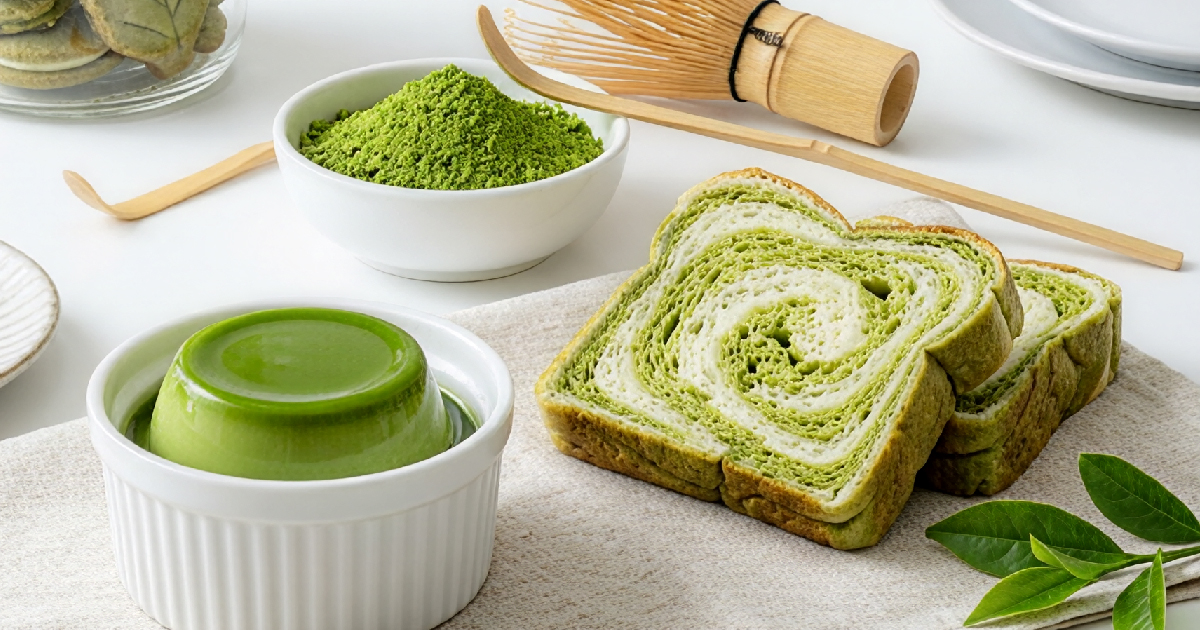
Matcha powder on the baking market is generally divided into three grades:
Designed specifically for baking, with a slightly stronger bitterness that balances beautifully when paired with sugar, butter, and other ingredients. The best choice for home baking — great quality for the price.
More yellowish-green in color with a milder aroma. Primarily used in large-scale factory production and not recommended for home baking.
Buying tip: The more vivid and vibrant green the color, the better the quality and the higher the chlorophyll content. A yellowish-brown color indicates oxidation or inferior quality.
Matcha powder is incredibly versatile and commonly used in the following desserts:
Matcha powder clumps very easily. Always sift it before use to ensure it blends evenly with flour or other dry ingredients, preventing green specks in the finished product.
A general guideline: use 5–10g of matcha per 100g of flour. For a more intense flavor, you can increase this to 12–15g, but going overboard can make the final product too bitter or affect the structure of the batter.
The chlorophyll in matcha oxidizes and turns yellow at high heat. Keep oven temperatures between 160–175°C and avoid over-baking to preserve that beautiful green hue.
The sweetness and milky notes of white chocolate complement the slight bitterness of matcha perfectly — a golden combination beloved by bakers.
Once opened, matcha powder is highly susceptible to moisture and oxidation. Seal it tightly and store it in the refrigerator, using it up as soon as possible to maintain the best flavor and color.
Q: Why does my matcha cake turn out yellow after baking?
A: This is usually due to low-quality matcha, insufficient quantity, or an oven temperature that's too high, causing the chlorophyll to oxidize. Try increasing the amount of matcha, lowering the baking temperature, and choosing a high-quality matcha powder with a bright, vivid green color.
Q: Can I substitute green tea powder for matcha powder?
A: Not quite. Green tea powder is made from regular green tea leaves — it has a milder aroma and more yellowish color, with a noticeably different flavor profile from matcha. It cannot be used as a direct substitute.
Matcha powder is one of the most captivating ingredients in the world of baking. Its unique balance of bitterness and sweetness, vibrant color, and deep cultural heritage elevate countless desserts to something truly special. Master the art of choosing and using it correctly, and you'll be creating Japanese patisserie-worthy matcha treats right from your own kitchen!