



Black tea is one of the most widely consumed teas globally, and among its many varieties, Earl Grey and Assam are the two most renowned classics. While both share a "black tea" base, they possess entirely different flavor profiles and cultural backgrounds. This article will take you on a deep dive into the origins, characteristics, and best applications of these two tea powders.
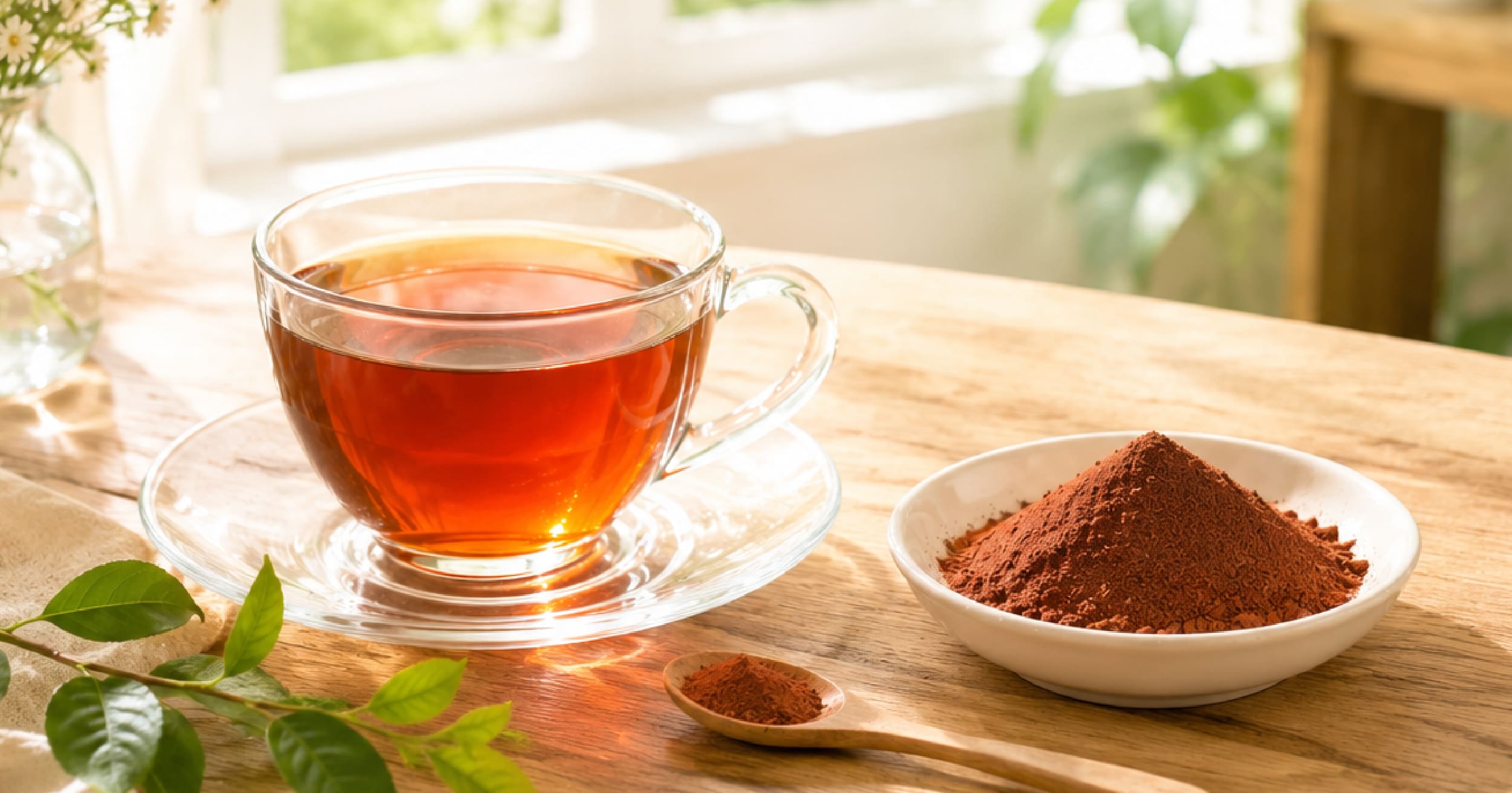
Earl Grey is named after the British Prime Minister, Charles Grey (2nd Earl Grey, in office 1830–1834). Legend has it that he received a diplomatic gift of Chinese tea flavored with bergamot oil, and this unique flavor has borne his name ever since. Modern Earl Grey is typically made by blending or spraying bergamot essential oil onto a base of Ceylon or Chinese Qimen (Keemun) black tea.
Bergamot (Citrus bergamia) is a citrus fruit native to the Calabria region of Italy, with an appearance somewhere between a lemon and an orange. Its rind is rich in a distinct aromatic essential oil, featuring a scent that sits between orange blossom and lavender—fresh, with a subtle bittersweet undertone. This is why Earl Grey offers both the robust body of tea and a light, floral-fruity elegance.
Due to its unique aroma, Earl Grey tea powder is widely used in baking and beverage crafting.
Assam tea is grown in the state of Assam in northeastern India. Situated at the foothills of the Himalayas, this region features a tropical monsoon climate with low altitude, high humidity, and abundant rainfall, making it one of the largest single tea-producing regions in the world. The local cultivation uses the large-leaf variety of the tea plant (Camellia sinensis var. assamica), which has broad leaves rich in chemical compounds, naturally making it ideal for producing robust, full-bodied black teas.
Much of Assam black tea undergoes the CTC (Crush, Tear, Curl) method, where tea leaves are mechanically crushed, torn, and curled to fully break down their cells. This allows for a rapid extraction of a rich, intense liquor. Consequently, Assam black tea powder dissolves quickly and yields high color extraction, making it exceptionally well-suited for milk teas or industrial-scale beverage production.
Assam black tea powder is the ultimate choice for making milk tea. Its intense tea character complements the richness of milk fats without being overwhelmed, enhancing the overall creaminess.
|
Comparison Item |
Earl Grey Black Tea Powder |
Assam Black Tea Powder |
|
Origin |
Ceylon/Qimen tea base infused with Italian bergamot essential oil |
Assam, India |
|
Tea Variety |
Primarily small-leaf variety (sinensis) |
Large-leaf variety (assamica) |
|
Processing Method |
Traditional rolling followed by flavoring |
Mostly CTC method |
|
Primary Aroma |
Citrus and floral |
Malty and earthy |
|
Body / Intensity |
Medium |
Strong and bold |
|
Performance with Milk |
Aroma can be slightly masked; best with less milk |
Milk-resistant; excellent for milk tea |
|
Recommended Uses |
Baking, flavored beverages, straight drinking |
Milk tea, bubble tea, baking bases |
Both tea powders have their unique merits. You can also experiment by blending them in different ratios to create your own signature flavor profile.
The essence of good tea lies in understanding it. By choosing the right tea powder, every cup becomes a journey of flavor.